The next time you are on a Motorway, Dual Carriageway or any road that carries faster moving traffic, check out the distance between you and the vehicle in front.
Ask yourself........Could I Stop if........?
Many collisions on roads carrying faster moving traffic are attributed to driving
too close.
So, why do people drive too close?
- They are unaware of the recommended following distance
- They do not appreciate the danger's involved
- They place too much trust in their vehicle's safety equipment
- They place too much trust in their own reaction times
- They are rushing to get to their destination
- They do not want others to move into their space
- They may want others to move out of their way
- They may be lacking concentration
- They may be involved in a road rage situation
" If I leave a 2 second gap another driver will move into it and I end up dropping back and losing time"
You do not lose any significant time by keeping your distance!
If a driver moves into the space you are keeping you will obviously ease of the accelerator to maintain your safe distance, but over the course of your journey (10 miles or 100 miles) the time lost is insignificant.
In fact, by keeping your distance at all times you are in a better position to plan well ahead, which results in well timed decisions, especially when overtaking on motorways and dual carriageways.
So, what are the advantages of keeping your distance?
- You get to your destination safely
- You get to your destination!
- You can look and plan further ahead
- You can help to avoid motorway hold-ups.
- You feel much less tired and stressed
- You save fuel
- You save on vehicle maintenance costs
- Your passengers feel safe
- You are more visible to drivers' of larger vehicles
- You understand your vehicle's capabilities
- You understand reaction times
- You understand your vulnerability
How do we judge a safe distance?
You should allow a gap of at least 2 seconds (in good conditions) between you and the vehicle in front. This can be achieved by waiting for the vehicle in front to pass a stationary object such as a lamp-post, road sign or bridge etc. Then counting SLOWLY to three.
Or by reciting: 'One thousand and twenty one, one thousand and twenty two'.
You need to double this distance in wet weather conditions and leave up to ten times this distance if conditions are severe (snow, ice and fog)
Drivers of larger or heavier vehicles need to increase their following distance.
Drivers of larger or heavier vehicles need to increase their following distance.
Your optimal following distance will soon become second nature after observing this advice.
And finally, some facts and visual conversions:
- Average driver reaction time is 0.7 seconds (alert and well rested)
- At 60mph you will travel 88 feet per second (26.82 metres)
- At 70mph you will travel 103 feet per second (30.48 metres)
- Overall stopping distance at 60 mph is 240 feet (73 metres)
- Overall stopping distance at 70 mph is 315 feet (96 metres)
- 315 feet relates to just over the distance between two countdown markers on a motorway or dual-carriageway slip road exit
- An average driver travelling at 70mph and reacting to slow or stationary traffic ahead will have used up a third or more of the distance between two countdown markers before beginning the process of braking!
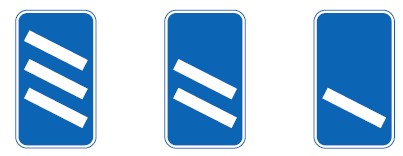 |
| Distance between each marker on approach to slip roads is 100 yards (300 feet) |
Source: Highway code

No comments:
Post a Comment